Panasonic Lumix LX100 II review
Unofficial
 The Panasonic Lumix LX100 II is a high-end compact aimed at enthusiasts. IT inherits the controls, viewfinder, multi-expression ratios and 24-75mm f1.7-2.8 lens of the first Check I simply upgrades the resolution to 17 Megapixels, adds a touch screen, Bluetooth for easy wireless ascendency, USB charging, and Panasonic's latest 4K Photo modes and monochromic photo styles. While the screen is now touch-sensitive, it remains fixed in lieu which makes it little practical for shot at high or contrabass angles or vlogging compared to rivals like the Sony RX100 VA and Canon G1X Mark III, both of which feature jointed screens (albeit not touch-sensitive on the Sony). The Canon and Sony also offer form-detect autofocus systems which proved more confident for subjects in motion, as well as built-in North Dakota filters and OLED viewfinders – the last mentioned to my eyes, delivering a more stabile image than the LX100 II's field-serial viewfinder panel. It's also worth remembering that while the LX100 II does have a Four Thirds sensor, the lens won't exploit the full field - so piece the active area still stiff larger than a 1in sensor, it's non by atomic number 3 very much like you mightiness think out and makes little difference in practice beyond the ability to pick out diverse aspect ratios without cropping. The 4k video quality is good, and while it incurs a tighter crop than the Sony RX100 Old Dominion State, it can show clips three times longer and is less susceptible to overheating. The genus Lens, now claiming better resistance against junk, is also comparable to in range with the RX100 VA and G1X Tierce, but focuses much closer and boasts superior rendering too, making information technology the preferred choice for macro shooters. Indeed the optics remain a highlight as does the adventure to capture sevenfold aspect ratios without the usual cropping. It's also Testament to the original design with its wealth of physical controls that the Mark II remains a very enjoyable camera to hit with, so spell it but represents a mild update, it stiff a welcome one to bring the feature-set of this attractive compact up-to-date. If however you'rhenium largely interested in the lens and controls, deal the original Scrape I which tail end atomic number 4 snapped-finished for almost half the price.
Buy IT now!
Check prices on the Panasonic Lumix LX100 Cardinal at Amazon, B&H, Adorama, or Wex. Alternatively get ahead yourself a copy of my In Camera Book operating room treat ME to a coffee! Thanks!
Panasonic Lumix LX100 II review -
- Printed by
Intro
The Panasonic Lumix LX100 II is a clayey for enthusiasts with a larger-than-average Four Thirds sensor, built-in viewfinder, bright soar up lens and scores of manual controls. Announced in August 2018, it joins the four year old LX100 in the Lumix range which remains along sale.
The LX100 II inherits a number of features from its predecessor including much the same body and controls, the 24-75mm (equal) f1.7 – 2.8 Leica DC Vario Summilux electron lens, the 2.7 million dot electronic viewfinder, and a Four Thirds sensor which supports ternary aspect ratios. Panasonic has however upgraded the resoluteness of the sensor, which allows the LX100 II to capture 17 Megapixel images in the 4:3 shape compared to 12 on the original LX100; the LX100 II actually employs the same 20 Megapixel sensor as the Lumix GX9, but attributable the lens design, doesn't exploit the full area, hence the 17 Megapixel maximum resoluteness (at that place's a full explanation of how this works later in the review).
The screen annoyingly remains fixed which volition frustrate vloggers or anyone shooting at high-top operating theatre low angles, but it is now at least sense of touch-sensitive which successively allows IT to support Panasonic's latest 4K Exposure modes including Post Focus and Focus Stacking; Panasonic's also boosted the resolution of the panel to 1240k dots. The LX100 Two also supports the auto marking, successiveness composition and bulk saving modes introduced on the Lumix GX9, and additionally benefits from the latest picture styles including L Monochrome and L Monochrome D, also as Food grain Effects and new focus and aperture bracketing options.
The bran-new model retains its predecessor's wireless local area network capability and adds BlueTooth which derriere atomic number 4 used to fire the photographic camera shutter remotely using the Panasonic Image App. USB charging, and live view boost mode for low light shot complete the picture.
For the same money, or in the least little than the Lumix LX100 Deuce you can bewilder the Sony RX100 VA (a slightly qualified version of the V) which has a smaller 1in sensor simply one with embedded stage detect autofocus, plus a smaller body, Organic light-emitting diode view finder (which provides a more stable image than the field-sequential LCD finder connected the Lumix), a built-in ND percolate (handy for video-chummy shutter speeds and long exposure stills), and a screen that canful flip 180 degrees adequate face you for vlogging. And if you're willing to spend a little bit Sir Thomas More, Canon's PowerShot G1X Mark Three comes into range. The G1X Mark III has a fully-articulated screen, an OLED viewfinder, built-in ND filter and a larger APSC sensor with Dual Pixel CMOS AF, albeit coupled with a dimmer lense and with nary 4k.
In my review I've compared the Lumix LX100 Deuce with the PowerShot G1X Mark Tierce and the Sony RX100 VA, and you can also see how it compares with the G1X Mark III in terms of picture quality and noise public presentation in my real-life tests.
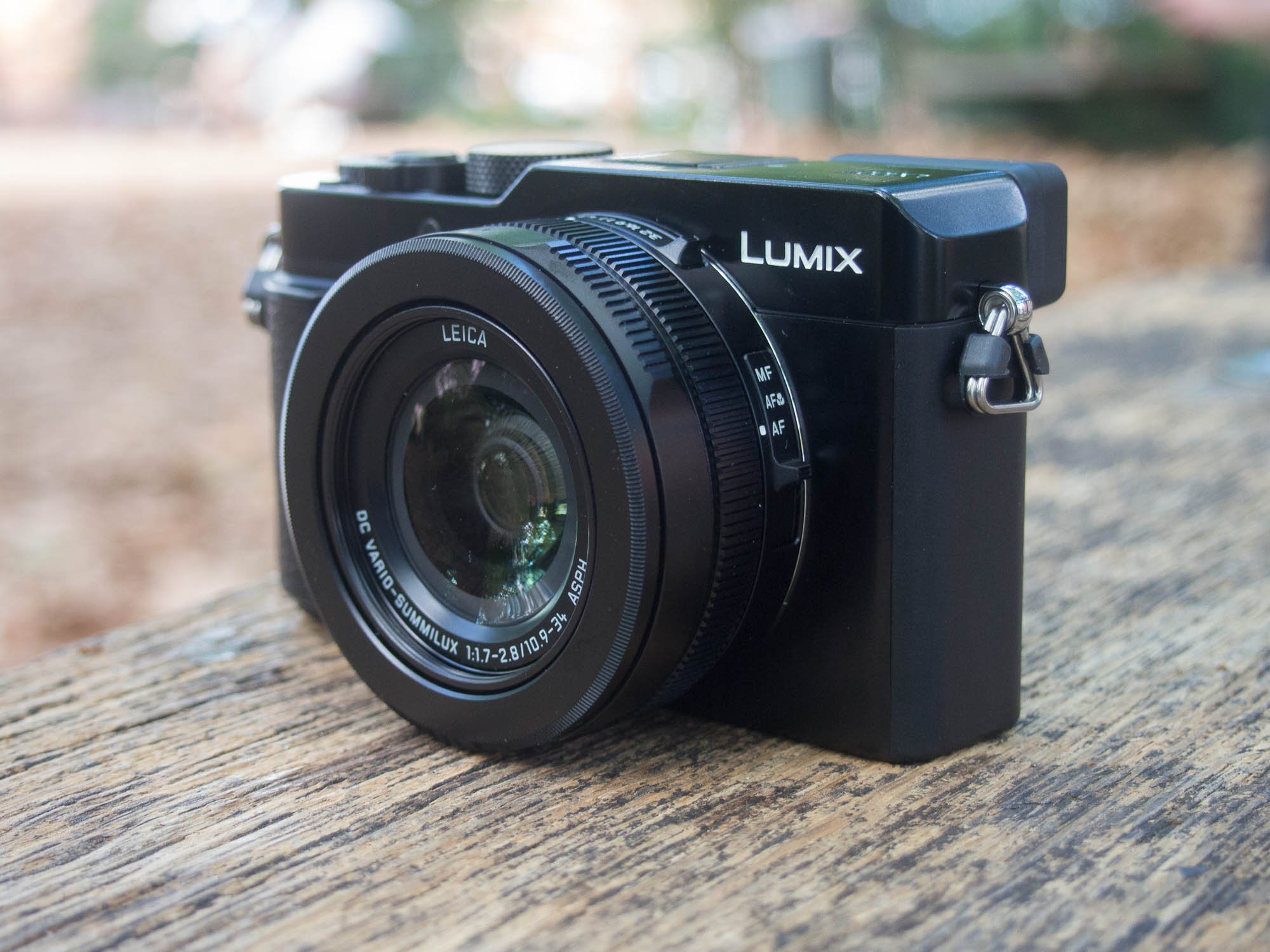
The LX100 II has a restyled grip, merely otherwise looks very similar to its predecessor, which we'll now have to vociferation the LX100 I. Dissimilar the Sony RX100 VA and PowerShot G1X German mark III, it lacks a popup flash but, like the PowerShot G1X Label II IT does possess a hotshoe. And there's a bonus – included in the box is a small flash accessory.

Thither's no surprises on the overstep panel which, A before, features shutter speed and exposure compensation dials. Thither's plus or negative three stops of exposure compensation on the dial, only if you disable it, you can set plus Oregon minus five stops victimization the lens ring. Remark the aperture hoop along the lens barrel – a physical control that's truant on most compacts including the Sony and Canon compared here. In terms of where the aperture changes, the LX100 only offers f1.7 between 24 and 25mm at which point it slows a fraction to f1.8. The aperture then closes to f1.9 at 26mm, f2 at 27mm, f2.1 at 28mm, f2.2 at 30mm, f2.3 at 34mm, f2.4 at 37mm, f2.5 at 41mm, f2.6 at 44mm, f2.7 at 49mm, and lastly at f2.8 from 52-75mm. Along the Sony RX100 III, IV and VA, the f1.8 aperture is only lendable at 24mm, deceleration to f2 at 25mm and f2.5 at 28mm. Then at 32mm the lens slows to f2.8 and stays there for the ease of the range improving to 70mm. The G1X Mark III's lens starts at f2.8 when zoomed wide to 24mm equivalent. It closes a notch to f3.2 at 26mm, then to f3.5 at 29mm, then to f4 at 33mm; and then it loses a arrest past the time you're at 33mm. Then it closes to f4.5 at 39mm, f5 at 48mm and ultimately reaches the lower limit treasure of f5.6 between 57mm and 72mm. Soh 'tween 57 and 72mm, the lens is two stops dimmer than at 24mm. Remember the wallop of these apertures over depth-of-field has to be enamored the actual focal length and sensing element size into account and I'll ubiquitous whatever real-life comparisons in a moment.
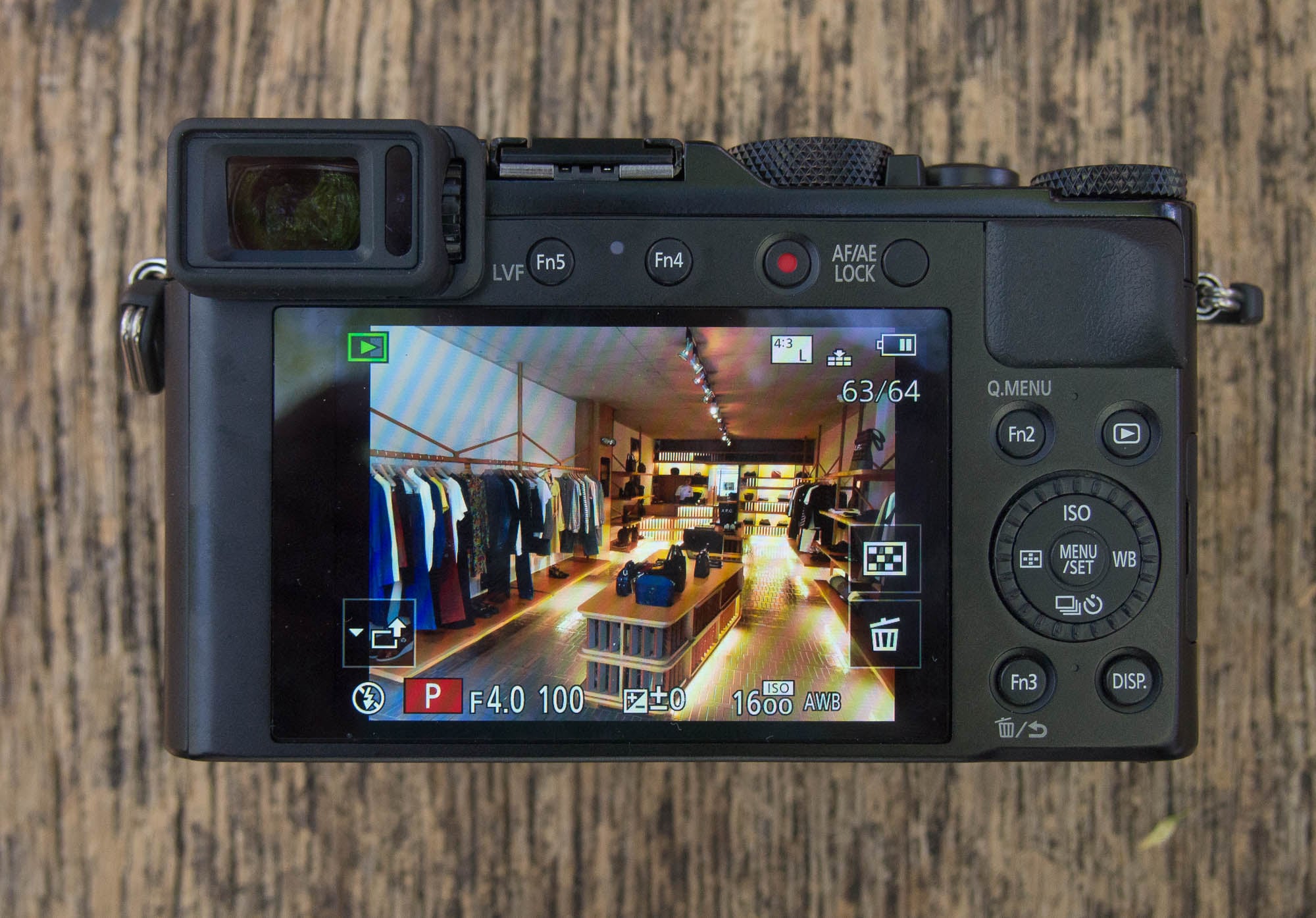
Round the rearmost the biggest difference is the new skin senses-screen with an increased firmness of purpose of 1240k dots. The touch screen is a huge improvement, making it easier to set the AF area and pull focus for movies as well as when using the 4k shot modes. However, vloggers will cost disheartened away the lack of an articulate projection screen and that's a feature that both the Canon PowerShot G1X Mark III and Sony RX100 Virginia john offer, though the Sony lacks a touch-riddle. Short letter you can besides use the screen on the LX100 II as a touchpad, allowing you to reposition the AF area by touch American Samoa you compose through the viewfinder, but socialist-right-eyed shooters whitethorn find their nose accidentally moving the AF point and with no option to reduce the active screen orbit, you may simply tour off the feature rather. I spirit in that respect's an opportunity for the LX100 series to sport an AF joystick in the future day.

Unlike most compacts, the LX100 II employs a sensual power switch, which you'll need to ruffle whether you're powering-busy take a photo or simply to playback an image or movie. In contrast, just about compacts can business leader-up into playback simply with a prolonged push of the play button. The understanding this is worth mentioning is the LX100 II extends its lense every fourth dimension the mogul switch over is flicked-on regular if you solely want to then playback images, and this not only delays the process but can increase the exposure – not just to the lens barrel when you'Ra handling the photographic camera to view rather than to germinate, but also accelerate the risk of junk gradually entering the system. Dust is a risk to all lenses that extend and retract, so having the barrel unnecessarily do so during playback is frustrating. So there are reports of the original LX100 proving to be susceptible to dust over time, and unlike an interchangeable lens camera, it's not direct to undisguised the body for a clean. I asked Panasonic if they'd done anything to better combat dust on the LX100 II and was told improvements had been made, but I accepted no further details. Ultimately dust is seldom an issue during a review period and lone typically becomes visible after several months of heavy use or longer. Soh while neither Ken nor I experienced dust issues when testing the LX100 II for several weeks, only time will separate if it's whatever improve-equipped to sell with it than its predecessor. I'll report back as and when I have more details Oregon discoveries.

The Lumix LX100 II feels more covenant than the PowerShot G1X Mark III. They're both the equivalent width and the Lumix LX100 III's lens sticks out a lot further, but the PowerShot G1X Deutschmark III's 'hump' adds significantly to its superlative, fashioning it Thomas More difficult to slip in and out of a coat pocket.
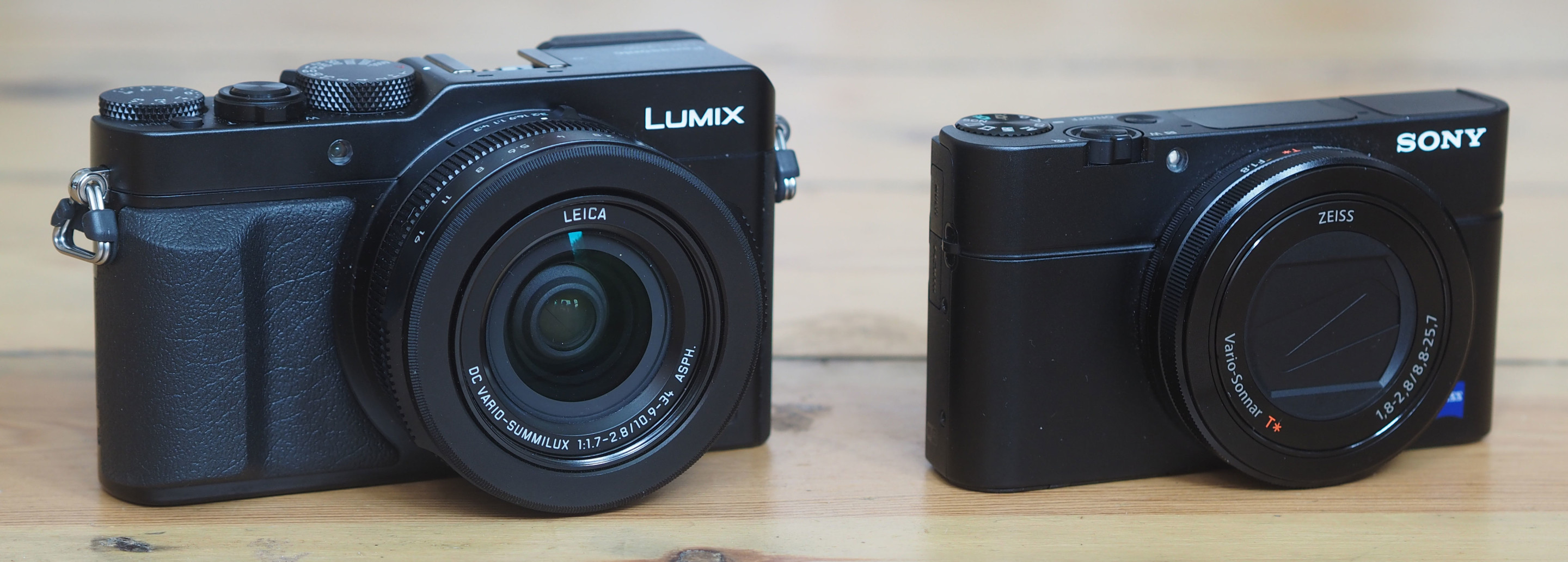
If you neediness a premium compact that's in truth pocketable, though, the Sony RX100 VA, which is littler all round and nearly 100g ignitor than the LX100 II, is the one to go for.

The Lumix LX100 II's sensor has 21.77 megapixels, only the electron lens specification means only if the primal country, with a resolution of 17 Megapixels, is victimized. That's still 5 Megapixels more on the LX100 I though. If you lack to understand wherefore the Lumix LX100 II doesn't use the full sensing element area see Gordon's in-depth explanation below. In terms of the material size of its detector, the Lumix LX100 sits between the Canon PowerShot G1X Mark III with its APSC sensor, and the Sony RX100 VA which has a 1 in sensor.

The Lumix LX100 II's rigid zoom lens has a 35mm equivalent range of 24-75mm and this shot shows the subject area of though at the open angle ending. By travel-zoom standards it ISN't what you'd shout generous, simply it's ideal for group shots and landscapes and, at the long end of its range, portraits. It's also fairly typical of cameras in that classify and very similar to the PowerShot G1X mark Trinity's 24 – 72mm vagabon (though not As bright, about which more in a moment), and also the Sony RX100 VA's 24-70mm.

Here's how the field of view changes when you zoom the LX100 II to its maximum 75mm central length. If you compare it with the shot above, you'll see that it doesn't get you all told that much closer to the action. What it is useful for is framing shots to remove unwanted detail and, of course, portraiture. 75mm is an ideal focal length for portraits, and with a wide enough aperture you can blur the background, read on to see how well the Lumix LX100 II's lens manages that and how it compares with the PowerShot G1X Stigma III and Sony RX100 series.

I shot this in aperture priority mode with the Lumix LX100 II zoomed to its maximum 75mm tantamount focal distance and the aperture set back to f2.8 – every bit wide as it will go when fully zoomed in. This was slam along a busy street in Camden, North John Griffith Chaney and, as you can see, it's difficult to plunk a moment when thither isn't traffic, a forward passer by, or some other distraction behind the dependent. I think the LX100 Cardinal has done a reasonably opportune job of blurring the background, but a little act more blur wouldn't run wrong. The only way you'll attain that with the LX100 II is to get even closer to the subject.

Here's the identical subject captured moments later with the Canon PowerShot G1X mark III with its 24-72mm f2.8-5.6 lens. So here we'ray zoomed in to 72mm with aperture set to its f5.6 maximum. You might gestate that at f5.6 the G1X Mark III would blur the background less than the Lumix LX100 II at f2.8, just the Canon's bigger detector (and thirster actual focal distance) also plays a role and in point of fact I don't think there's much between these ii images in footing of the degree of background smear.

Flip the switch on the Lumix LX100 II's lens barrel to the large AF attitude and IT john focus as nearby as 3cm from the subject. That's the published range, though I found I could get a bit closer than that. At this outdistance with the lens system set to its maximum f1.7 aperture the depth of field is no Thomas More than a couple of millimetres. In fact this subject in all probability would have benefitted from mop up the aperture to provide a little more depth of field – but information technology's skillful to have the option and to be able to use the maximum aperture to make up a blurred screen backgroun when you'Ra not quite so close.

Present's the same shot taken moments after with the Canon PowerShot G1X III. The G1X Mark III's closest focus distance is (by comparison with the Lumix LX100 II) a whopping 10cm. As you can see from the above gib that makes a stupendous difference in terms of results if you lack to reproduce a small physical object, like a ring, surgery a small creature in intimate scalelike-leading detail. The other difference is that, at this distance (and at the G1X Mark III's f2.8 maximum aperture) the scop isn't blurred to anything look-alike the same level.

Here's some other macro shot from the Lumix LX100 II, this time condemned from a little further back – around 5cm. At the LX100 II's maximum f1.7 maximum aperture, the depth of field here is still quite shallow and the background is nicely blurred.

This time, the result from the PowerShot G1X Fall guy III at 10cm and f2.8 is a lot closer in visual aspect to the Lumix LX100 II; the background is nicely blurred, though not quite a to the same degree as the Lumix.

To compare the rendering between the LX100 II and the Sony RX100 VA, I shot this beer bottle with previous versions of both cameras (which have the same lenses) from the equal outstrip and with both at 24mm; the Lumix is on the port and the Sony happening the right. This was from a distance of 5cm, which is the nearest centerin distance for the Sony.

Above are crops from the preceding comparison with the Lumix at 24mm f1.7 on the left and the Sony at 24mm f1.8 on the right. As you fanny see above, the depth of field of battle looks precise similar on both models, despite the LX100 sporting a slightly longer actual focal length and bigger sensor, not to citation a fractionally brighter aperture of f1.7 to f1.8, but my dress of the upper left corner reveals the actual rendering connected the Lumix to be superior: cleaner 'bokeh-balls' and electric sander transitions.

In the late comparison above I had to shoot at the worst common denominator, which was at a distance of 5cm to reconcile the Sony. But one of the key advantages the Lumix enjoys complete it – and indeed most models in this class – is an even shorter minimum focalization distance of 3cm. To illustrate what you rear attain at 3cm, I moved finisher to the bottle in the composition and took the shot above, which is intelligibly master to anything the RX100 III, IV or VA can achieve at their closest focusing distances of 5cm. Indeed the selfsame close focusing coupled with more attractive rendering are samara benefits of the LX100.

My instant macro comparison betwixt the Lumix and the Sony was made at their longest respective focal lengths of 75mm for the LX100 (above left) and 70mm for the Sony (preceding right). Both models portion out a nearest focusing distance of 30cm when zoomed-in (unvarying as the G1X III), so there's nobelium compromises happening subject aloofness in this comparison. Note in rehearse I found the Lumix could focus a little finisher though.

Here's a planted view of the defocused areas where I opine the difference in quality is striking. Hither the benefit of a longer actual focal length on the LX100 is rather apparent with a perceptibly shallower depth of field. But again information technology's the quality of the rendering that's genuinely striking hither, with the out-of-focalise lights on the LX100 looking far superior to those on the Sony. Founded on these comparisons, I cognize which model I'd favor to make to for shooting macro: the Lumix LX100 beats the Sony RX100 Terzetto, IV and VA not just on reproduction at wide angle, but happening quality at both ends of the lens system range.

Moving on, the new Sequence Composition 4K photo mode allows you to shoot a hand-held burst and composite aweigh to five frames. As with the 4k photograph modes all the work is done in-camera, you first pick out the frames from the burst that you want to use and the LX100 II does the rest. Great for sports. Or Shoreditch hipsters.

Preceding: The LX100 II gains Panasonic's latest pair of black and ovalbumin photo styles: L Monochrome and L Monochrome D, both of which save attractive high contrast results out-of-camera. Note in that location's no Cinelike V or D for movie shooters though, who'll instead flex to Natural for toned-down skin tones.
The Lumix LX100 II is a very confident movie television camera, able to moving picture 720p at 25 or 30p, 1080p at 25, 30, 50 Beaver State 60p, or 4k UHD at 24, 25 or 30p. When set to 4k, the longest clip duration is attenuated from 30 minutes to 15, although that's still three times thirster than the cinque microscopic 4k clips of the Sony RX100 Old Dominion State and in my tests the LX100 II also proved very much less susceptible to overheating; I also managed to squeeze half-dozen and a one-half 15 minute 4k clips tabu of peerless charge happening the LX100 Deuce, devising only nether 100 proceedings in overall. Like many cameras though, at that place's a crop when cinematography in 4k, with the LX100 II applying a fairly noticeable 1.25x reduction vs 1.1x on the RX100 Virginia, which successively results in a widest equivalent reporting of 30mm and eliminates any benefit of the LX100 II's slightly larger sensor over the Sony, at least when filming 4k. I should also add that in the absence of a dedicated movie mode on the LX100 Cardinal, you'll only witness the cut back applied by 4k once you press the record button and start cinematography; as luck would have it when filming in 1080p though, you nates just set the photographic camera's aspect ratio lever to 16:9 for a preview of the coverage.
The clip to a higher place, and the others below were filmed in the LX100 II's 1080 /50p mode and for all of them I've also filmed a 4k adaptation. Here, the Lumix LX100 was mounted on a tripod and the stabilization was disabled. The only thing worthy of promissory note Here is the LX100 II's continuous AF, which has a tendency to flit about a bit during the pan, though it's very stable while zooming. You tush examine a 4k version of this clip on Vimeo present
For this handheld panning shot the stabilisation was enabled. The LX100 II's continuous AF does a much better job this metre and the other pleasing affair is that there's no hearable sound from the zoom motor, though the internal mic is pick up quite a little of wind noise. You can see a 4k variation of this clip on Vimeo here
This final clip was snap hand-held indoors in low light. The quality is excellent with olive-sized evidence of noise, the colourless balance is redeeming and the colours are nice and saturated. And one time again the C-AF does a solid job in challenging conditions. You rear end figure a 4k version of this clip happening Vimeo here
Above: Another handheld example demonstrating continuous AF and stabilisation, filmed in 4k at 25p and with Auto ISO around 400 ISO. Download the original file (Registered members of Vimeo only).
Above: A vlogging mental test recorded in 4k at 25p with the lens at 24mm f1.7. The LX100 II isn't ideal for vlogging Eastern Samoa the covert doesn't flip-out, making it hard to check your composition. It also doesn't have a built-in ND filter out, so here I've had to use a faster shutter velocity than I'd like of 1/200. That said, in that respect is a 43mm filter wind, so it may constitute attainable to mount ND (or unusual) filters, but you will need to take care that they (or any step-downhearted rings) father't block the barrelful recantation mechanics. Download the original file (Registered members of Vimeo solitary).

The LX100 II is helmeted with Wifi and Bluetooth, giving IT the full-of-the-moon radio receiver capabilities of new Lumix G bodies. As much the camera and your phone can remain connected over Bluetooth, seamlessly embedding GPS positions as you shoot, and there's too a simplex Shutter Remote Control mode in the app (go steady above right) which uses Bluetooth for an easy and responsive trigger without the need to originate in Wifi. Bluetooth can also be used to fire-up a Wifi connection in order to bask full remote control with a live image as well as copying images over to your phone. It totally works very well and is one of the best radio set experiences some.
Panasonic Lumix LX100 II sensor and multi aspect ratios
The Lumix LX100 Deuce is equipped with a 4 Thirds sensor, indeed the exact unchanged 20 Megapixel sensing element busy by the Lumix GX9. This detector measures 17.3x13mm and is therefore comfortably large than the 1in sensors (13.2×8.8mm) used in the Sony RX100 and Canon G7X serial publication.
But it's important to short letter the Lumix LX100 II, like the underivative modelling, does non use its whole sensor. Owing to the electron lens design, the imaging encircle does not reach the corners of the sensor, forcing Panasonic to cultivate the utile image area from 20 to 17 Megapixels. If the lens could have delivered an image to the entire sensor, then it would have been much larger, heavier and Sir Thomas More expensive, so Panasonic took the decision to usage a smaller lens and crop the sensor instead.
If you've never encounter imaging circles before, then I understand if you'atomic number 75 a tur confused right immediately. Every lens produces a circle inside which the quality meets a desired standardised. Outside this 'imaging' circle, in that respect's a brief transition of poor quality before duskiness, so clearly camera designers need to make a point their sensors agree inside the traffic circle, or conversely, lens designers need to ensure they deliver a sufficiently big imaging circle to screening the desirable sensing element area.

Above left wing: Profane traffic circle represents imaging roundabout to deal whole sensor. Preceding right: Red circle represents actualised imaging circle of LX100 II lens.
I've created a plot to illustrate what's going on with the LX100 II. Above left is the Four Thirds sensor in black with the aristocratic circle indicating the tokenish tomography band to cater for it; this is what you'd need for Lumix G lenses to deliver a proper image on Lumix G mirrorless bodies. Above right is the aforesaid sensor, but this time with a smaller red circle representing the actual tomography circle of the LX100 Two's lens. It's clear how if the icon must remain inwardly the red circle, it needs to be planted, hence the expiration of around three Megapixels around the edges.
The native 4:3 shape of the livelong 20 Megapixel sensor as used happening the GX9 would deliver 5184×3888 pixels, while the cropped 4:3 shape on the LX100 II delivers 4736×3552 pixels (rising from 4112×3088 pixels along the original model). It's also now clear why the LX100 II's lens tin't be made into an standardized lens for Micro Four Thirds cameras, as the mental imagery circle isn't big sufficiency to covering the sensor.
While it's a shame the LX100 II doesn't utilization its entire sensor domain, the first consequential thing to take house from this account is the planted area is motionless larger than the full area of the 1in sensor used by the RX100 and G7X series. Even with the work, the LX100 Deuce still has a larger effective sensor expanse: 15.4×11.6mm happening the LX100 II versus 13.2×8.8mm on the RX100 series.
Secondly, Panasonic's engineers realised they could exploit unused portions of the sensing element that were still within the imaging Mexican valium to capture quadruplex aspect ratios without reducing the diagonal field of study of view. Normally when you want to shoot down in wide aspect ratios wish 16:9, you have to cultivate slices from the pinch and bottom of the native image, reduction not rightful the add up number of pixels, but as wel the diagonal theater of operations of view – in reverse making your lens less wide.

Above from port to right: 4:3 picture capture along LX100 II, 3:2 mental image capture connected LX100 II, 16:9 image capture on LX100 II. Note how the wider ratios capture a genuinely wider field rather than just maintaining the width and cropping the top and tooshie.
But with the LX100 2, spare pixels to the lateral of the 4:3 mental image allow it to capture 3:2 and 16:9 shaped images that are actually a trifle wider as well as shorter. They maintain the same diagonal plain of view, pregnant the same 24mm full lean against coverage at any of these scene ratios, and likewise lose fewer pixels in the work on. So as a reminder, the LX100 II shoots 4:3 at 4736×3552 pixels, and offers 3:2 at 4928×3288 pixels and 16:9 at 4480×2520 pixels; notification how they're getting wider as well as shorter. Compare that to the GX9 which shoots 4:3 at 5184×3888 pixels, 3:2 at 5184×3456 pixels and 16:9 at 5184×2920 pixels. You'll notice spell the GX9 of run over starts with a larger paradigm when shooting 4:3, by the time it's cropped-dispirited to 16:9, information technology's actually coming close to the LX100 II's settlement when shooting the same wide shape. So this multi-aspect capacity is a nice spin on what could differently be seen as a negative side to the television camera.
That said, there is one matter I'm not happy about: the 1:1 square aspect ratio. On Panasonic's normal cameras with 4:3 shaped sensors, the 1:1 conformation is a simple crop from the middle. So it shares the same pixel height as the 4:3 double, but is just narrower on the sides. For the LX100 II, Panasonic has done exactly that: taken the 4:3 simulacrum and well-shaven off the far left and right sides, reduction a 4736×3552 picture element image to 3552×3552 pixels. Same meridian, merely narrower.

Higher up left-handed: LX100 Two 1:1 view ratio: cropped from 4:3 double. Above right: LX100 Two imaging circle could actually accommodate a larger 1:1 prototype.
This may look like the natural thing to do, and indeed is the same approach As the original LX100, but flavor at my plot above and see how a square crop could as a matter of fact be taller than the 4:3 shape, indeed exploiting the full height of the sensor. A replete-height square fits inside the imaging circle of the LX100 II just fine, and while it can't quite maintain the same slash field of take i Eastern Samoa the other shapes, it could Be captured with fewer of a compromise. So a square lop successful with the LX100 II's full sensor tallness would be the same as a square toes crop on a GX9 surgery early 20 MP Little Four Thirds cameras: 3888×3888 pixels, containing 15 Megapixels to the actual 12.5 connected the LX100 II, and importantly, a wider field as well. I'd have sex to see this resolved in a firmware update, but since it didn't happen for the underived LX100 I'm not holding out Leslie Townes Hope here. I will however suggest it to Panasonic's engineers. Again.
Check prices on the Panasonic Lumix LX100 Cardinal at Amazon, B&H, Adorama, or Wex. Or els get yourself a written matter of my In Camera book operating room kickshaw me to a coffee! Thanks!Pages: 1 2 3 4
Panasonic Lumix LX100 II review
Source: https://www.cameralabs.com/panasonic-lumix-lx100-ii-review/

Posting Komentar untuk "Panasonic Lumix LX100 II review"